Stanford and University of Mannheim researchers find deep decarbonization is far more affordable than previously believed.
A new academic study from Stanford Graduate School of Business and the University of Mannheim is challenging long‑standing assumptions about the cost of cleaning up one of the world’s most carbon‑intensive industries: cement.
Cement production accounts for around 8% of global CO₂ emissions, largely due to the chemical reactions and extreme heat required to produce clinker. For decades, policymakers and industry leaders have warned that deep decarbonization would come with steep price increases for consumers. The new research suggests this belief may be outdated.
The study — conducted by Professor Stefan Reichelstein (Stanford GSB), Gunther Glenk, and Rebecca Meier (University of Mannheim) — introduces a new analytical framework that evaluates how emissions‑reduction technologies interact inside cement plants. Their findings indicate that major emissions cuts can be achieved at surprisingly modest cost increases.
A More Realistic Way to Measure Abatement Costs
Traditional tools such as marginal abatement cost curves evaluate each decarbonization measure independently. The researchers argue that this approach overlooks how technologies influence one another inside a complex industrial system.
“The abatement impact of a particular measure depends on what else you’re doing,” Reichelstein explains. “You need to look at these jointly.”
By analyzing nine core decarbonization technologies and 512 possible combinations, the team identified only 18 cost‑efficient pathways — and just nine that are currently incentivized under existing carbon prices.
Carbon Pricing Could Drive Deep Decarbonization
The study focuses on the European cement industry, which operates under the EU Emissions Trading System (ETS). At the 2023 carbon price of €85 per ton, the researchers found that cement producers could be motivated to cut emissions by about one‑third.
But the most striking result comes from modeling higher carbon prices.
If ETS prices rose to €141 per ton, cement manufacturers would be incentivized to reduce emissions by up to 96%. Despite this dramatic reduction, the researchers estimate that production costs would rise by only about 12% — far below earlier projections that suggested costs could double.
“Our counterintuitive finding is that within a certain range of carbon prices, you’re getting a lot of bang for your buck,” Reichelstein says. “Prices for cement don’t go up that much, yet emissions fall dramatically.”
Implications for Industry and Climate Policy
The findings challenge the widespread belief that decarbonizing heavy industry inevitably leads to prohibitive consumer costs. Instead, the research shows that strategic combinations of technologies — rather than isolated measures — can unlock affordable pathways to deep emissions reductions.
The methodology also applies to other hard‑to‑abate sectors such as iron, steel, and aluminum, which together account for 20–30% of global industrial emissions.
“In many industries, most of the abatement potential comes from moving away from fossil fuels,” Reichelstein notes. “But when emissions come from chemical reactions, as in steelmaking or cement, you need to deploy the types of levers we’re considering here.”
According to Glenk, fears about skyrocketing costs may be overstated. “Firms can avoid paying higher carbon charges by investing in abatement technologies,” he says. “And for a substantial level of abatement, these investments can be made at a relatively moderate cost.”
—
Read more here: https://www.gsb.stanford.edu/insights/concrete-step-toward-reducing-industrial-carbon-emissions and here: https://www.uni-mannheim.de/en/mises/
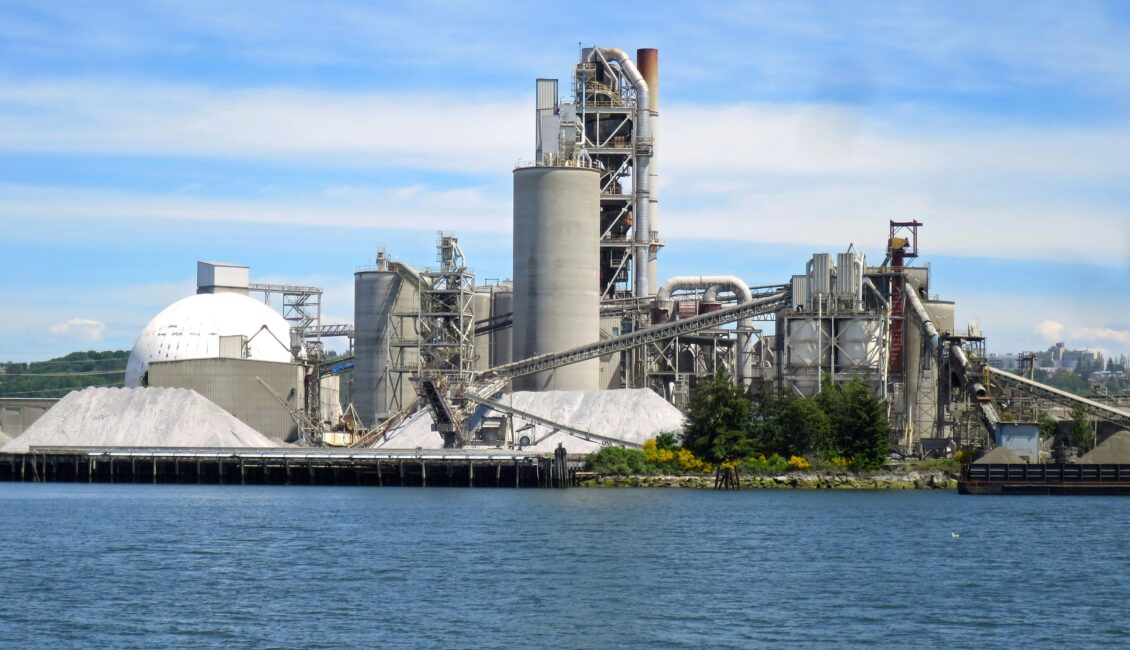
Photo by Chris Linnett on Unsplash
—
Want to know more about decarbonization, sustainable industry trends, and the breakthroughs driving real change? Explore the complete lineup of Industry Link’s 2026 events below:
Cementitious Materials International Technical & Trade Congress – Europe
28–29 October, Brussels, Belgium
A leading EMEA gathering on cementitious materials, market trends, regulatory updates, and regional opportunities.
CarbonZero Alternative Fuels & Raw Materials Global Conference & Exhibition 2026
Including Cementitious Europe – Congress
28–29 October, Brussels, Belgium
Global platform for Net Zero strategies, alternative fuels, raw materials, carbon capture, and emerging technologies.
Women in Cement and Construction International Congress 2026 – EMEA
30 October, Brussels, Belgium
A dedicated forum advancing diversity, equity, and inclusion across the cement and construction sectors.
Sustainability & ESG International Summit 2026
24 – 25 November, São Paulo, Brazil
Premier regional platform for Net Zero construction, circular economy, climate resilience, and ESG leadership.
Industry 5.0 Global Conference & Exhibition 2026
24 – 25 November, São Paulo, Brazil
Hosted at the same venue and dates as the Sustainability Summit — two events for one price, one ticket, full access.

Cementitious Materials International Technical & Trade Congress – MEA
8–9 December, Morocco
The premier MEA event for cementitious materials, innovation, and regional trade opportunities.

Sign up to our newsletter on industrylink.eu to receive the latest news and future events info as well as exclusive pricing. Follow our LinkedIn page for news and insights for the next events.