JPMorganChase has entered a long‑term agreement with carbon removal company Graphyte, securing 60,000 tons of durable carbon removal credits to be delivered over the next decade. The deal marks one of the strongest signals yet that major financial institutions are shifting toward high‑integrity, long‑duration carbon removal to address emissions that cannot be eliminated through conventional decarbonisation.
A Strategic Move Toward Durable CDR
For JPMorganChase, the agreement strengthens its climate strategy by integrating carbon removal solutions capable of operating at commercial scale. As scrutiny intensifies across voluntary carbon markets, buyers are increasingly prioritising permanence, verification, and reliable delivery—criteria that Graphyte’s technology is designed to meet.
Graphyte’s credits are produced through Carbon Casting, a process that transforms agricultural and forestry waste into a stable, carbon‑rich material intended for permanent underground storage. By compressing biomass into dense blocks, the company aims to deliver durable carbon removal without the high energy demands associated with other engineered approaches.
Turning Waste Streams Into Climate Assets
The company’s model centres on intercepting organic waste that would otherwise decompose and release CO₂. Stabilising these materials not only prevents emissions but also addresses broader land‑use and waste‑management challenges.
The first credits under the JPMorganChase agreement will come from Project Loblolly in Arkansas, which is already operational. A second facility, Project Ponderosa in Arizona, is under development and will expand Graphyte’s production capacity once online.
Graphyte’s ability to bring projects into operation quickly—and begin issuing credits early—positions it among a small group of carbon removal developers delivering real supply today, rather than remaining at pilot stage.
Local Benefits: Jobs, Land Restoration, and Wildfire Prevention
Both projects are designed to generate regional economic and environmental co‑benefits, a growing priority for corporate buyers seeking climate investments with broader impact.
- Arkansas (Project Loblolly):
Uses agricultural and timber residues, creates new revenue streams for farmers, supports local employment, and contributes to land restoration, including redevelopment of a former industrial site. - Arizona (Project Ponderosa):
Utilises forest biomass from thinning operations, directly supporting wildfire risk reduction while restoring disturbed land and creating wildlife habitat.
By embedding carbon removal within land‑management strategies, Graphyte’s model aligns climate mitigation with rural economic development and ecosystem restoration.
Market Signals: Demand Shifts Toward High‑Integrity Removal
The agreement reflects a broader evolution in voluntary carbon markets. Buyers are moving away from short‑term offsets and toward long‑duration, verifiable removal credits that can support net‑zero commitments.
JPMorganChase’s decision underscores growing confidence in technologies that can be deployed immediately and scaled over time. It also highlights a preference for solutions that deliver durability, transparency, and measurable co‑benefits.
Implications for Investors and Policymakers
The deal illustrates three major trends shaping the carbon removal sector:
- Institutional capital is entering long‑term offtake agreements, providing stability for emerging CDR developers.
- Durable storage solutions are becoming the benchmark, as companies seek credible pathways to net‑zero.
- Projects with local economic and environmental impact are gaining traction, aligning climate action with regional development priorities.
As global climate frameworks tighten and corporate climate claims face greater scrutiny, agreements like this signal a maturing carbon removal market—one where delivery, permanence, and real‑world impact are becoming the defining metrics of success.
—
Discover more about the future of sustainable construction, cement innovation, and decarbonization. Our events bring together global leaders, technical experts, and decision‑makers shaping the next era of the industry. Join us and take part in building a greener, more resilient world.
Below is the full list of Industry Link events in 2026:
Sustainability & ESG International Summit 2026
10–11 June, São Paulo, Brazil
Premier regional platform for Net Zero construction, circular economy, climate resilience, and ESG leadership.
Industry 5.0 Global Conference & Exhibition 2026
10–11 June, São Paulo, Brazil
Hosted at the same venue and dates as the Sustainability Summit — two events for one price, one ticket, full access.


Cementitious Materials International Technical & Trade Congress – Europe
28–29 October, Brussels, Belgium
A leading EMEA gathering on cementitious materials, market trends, regulatory updates, and regional opportunities.
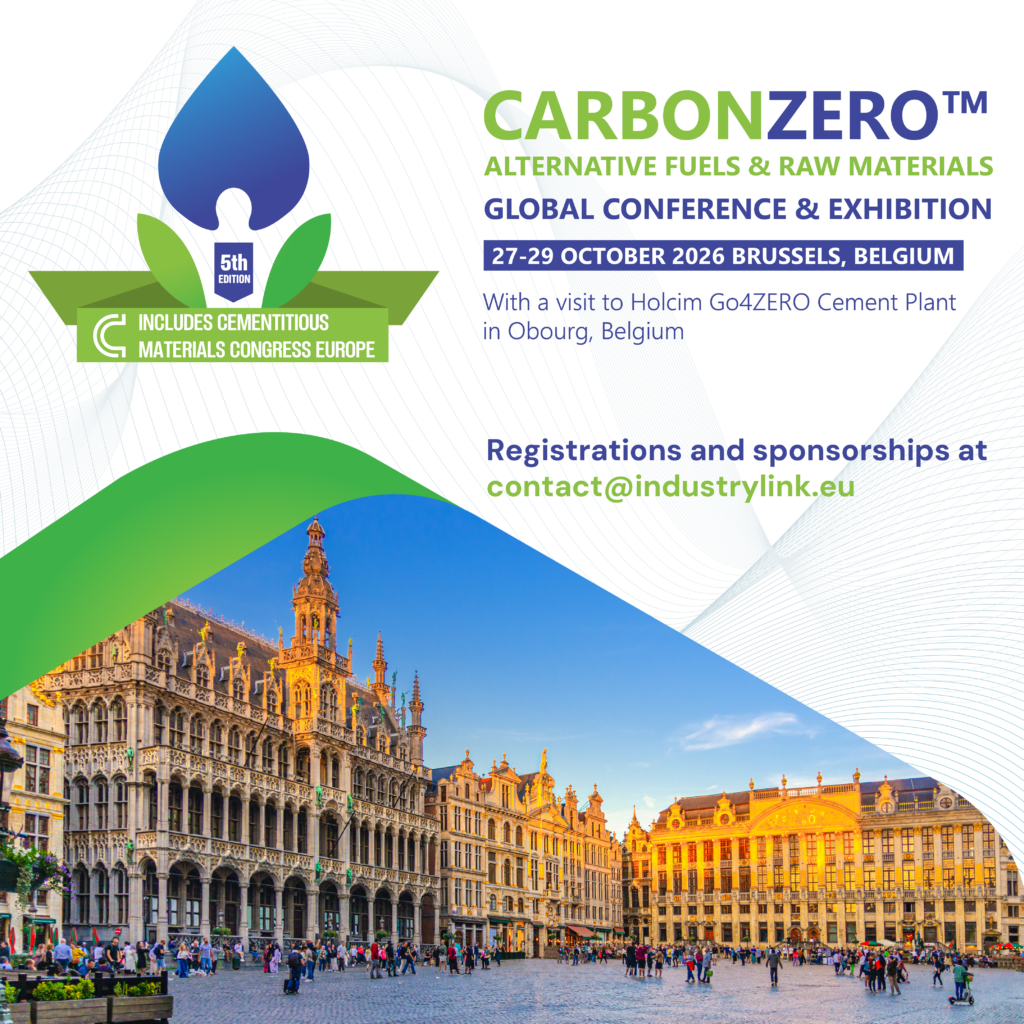
CarbonZero Alternative Fuels & Raw Materials Global Conference & Exhibition 2026
Including Cementitious Europe – Congress
28–29 October, Brussels, Belgium
Global platform for Net Zero strategies, alternative fuels, raw materials, carbon capture, and emerging technologies.
Women in Cement and Construction International Congress 2026 – EMEA
30 October, Brussels, Belgium
A dedicated forum advancing diversity, equity, and inclusion across the cement and construction sectors.


Cementitious Materials International Technical & Trade Congress – MEA
8–9 December, Morocco
The premier MEA event for cementitious materials, innovation, and regional trade opportunities.