Europe’s cement industry welcomed this week’s high‑level Sectoral Dialogue with the European Commission.
The meeting brought together CEOs of European cement companies with the Commissioner for Climate Action, Wopke Hoekstra, who hosted the discussion, and the Commissioner for the Environment, Water Resilience and a Competitive Circular Economy, Jessika Roswall, alongside senior Commission representatives and other stakeholders. The level of engagement reflected a shared willingness to move forward together on the competitiveness conditions needed to advance the sector’s transition in Europe.
With more than 200 plants supporting 14.5 million jobs across the construction value chain, cement and concrete remain essential to housing, infrastructure, clean energy systems, and defence. The sector continues to progress on more than 120 decarbonisation projects across Europe under its 2050 Roadmap, but each investment depends on a viable business case — the core focus of the Cement Action Plan.
Ensuring effective carbon pricing (ETS/CBAM):
At the meeting, the cement sector reaffirmed its support for the EU ETS as a market‑based instrument that can incentivise CO₂ reductions. Cement Europe CEOs emphasised, however, that continued support for the ETS is strongly conditional on a fully effective CBAM and long‑term business‑planning certainty as part of the upcoming EU ETS review.
Accelerating progress on energy:
Structurally high electricity prices continue to erode the cement industry’s competitiveness in Europe, and electricity demand is expected to increase two‑ to five‑fold as decarbonisation projects scale up. Participants discussed targeted short‑term measures to mitigate the impact on production costs.
On thermal energy, co‑processing was highlighted as a major lever that reduces exposure to volatile fossil fuel markets while decreasing the EU’s reliance on energy imports. Continued access to waste — without unnecessary administrative burdens and with a level regulatory playing field compared to incinerators — is essential.
Participants also stressed the need for improved energy interconnection networks and a rapid roll‑out of CO₂ transport and storage infrastructure.
Scaling up funding for decarbonisation:
The discussion focused on the design of the Industrial Decarbonisation Bank, which presents an opportunity to frontload future ETS revenues for Annex I sectors in proportion to their contribution. Participants highlighted the need to transform the Innovation Fund into a Deployment Fund to enable large‑scale implementation, and to include de‑risking schemes such as Contracts for Difference developed at European level.
Developing lead markets for low‑carbon products:
With price still acting as the primary selection criterion in many public tenders across Europe, the Industrial Accelerator Act was recognised as an important initiative to boost demand for low‑carbon products. The cement sector expressed support for binding EU targets for low‑carbon cements, noting that the suggested 5% threshold could be higher if applied to near‑zero and lower‑carbon products. The sector also called for public procurement rules to align with CO₂ performance criteria at building level, and for product standards to be updated more rapidly while reflecting technological progress.
Transition enablers:
Cement Europe emphasised the importance of supporting the workforce throughout the transition and highlighted its strong partnership with the European Federation of Building and Woodworkers (EFBWW). This collaboration builds on findings from their joint EU‑funded study on the sector’s future reskilling needs.
Simplification:
The sector urged continued progress on regulatory simplification, calling for legislation that is clear in its objectives, proportionate in its implementation, and capable of delivering predictable outcomes on the ground.
Jon Morrish, President, Cement Europe, said:
“Climate ambition and competitiveness must advance together. Our sector can invest at scale, but only with a CBAM that works, predictable ETS rules, action on energy prices, and the funding and CO₂ infrastructure needed to bring projects to final investment. With these conditions, the sector can deliver Europe’s transition.”Koen Coppenholle, CEO, Cement Europe, said:
“The Sectoral Dialogue highlighted the need for a strengthened partnership between cement industry and EU institutions. We welcome this engagement and the clear recognition of cement’s strategic role with a value chain strongly rooted in Europe. Our sector is ready to deliver, and we look forward to working with policymakers to turn Europe’s industrial and climate ambitions into concrete results.”
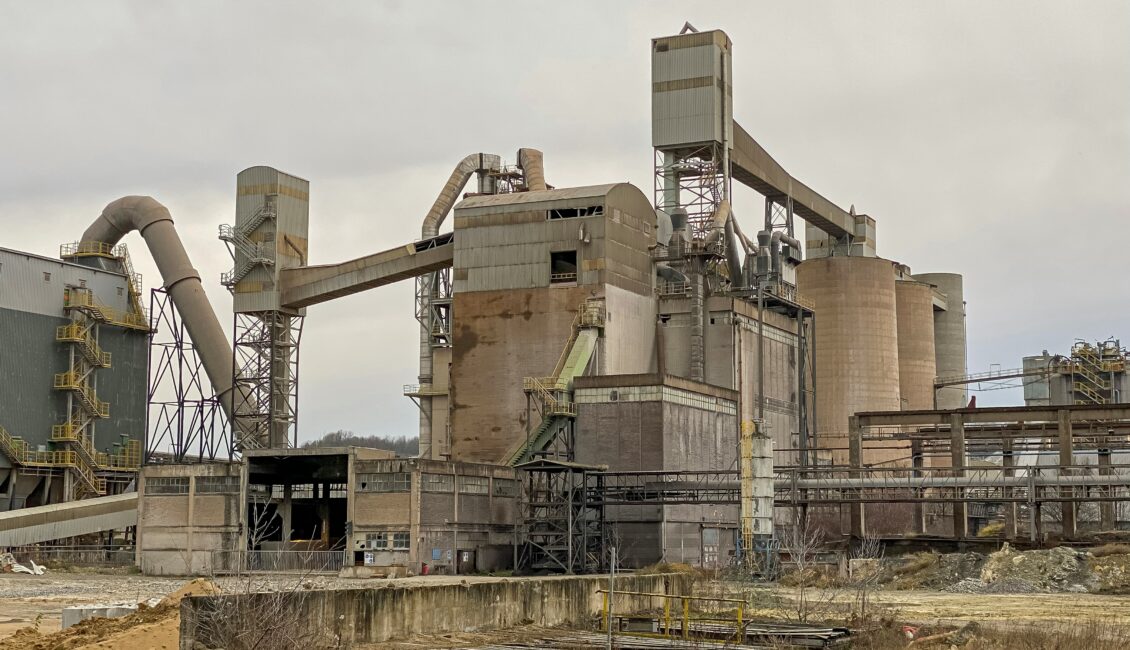
Image sourced from Etienne Girardet on Unsplash
—
Find out more about the future of building sustainably. Discover the latest in cement industry innovations, best practices, and decarbonization efforts at our upcoming events – join us to shape a greener world!
Email us at contact@industrylink.eu for program brochures and future events.
Sign up to our newsletter on industrylink.eu/#signupnow to receive the latest news and future events info as well as exclusive discounts.
—

Other events in 2026:
ESG and Sustainability International Summit and Industry 5.0 Conference and Exhibition – November 24-25, 2026; Location: World Trade Center, Sao Paulo, Brazil
A premier regional platform for industry leaders to discuss sustainability, ESG strategies, and regulatory advancements in cement and construction. This event brings together thought leaders and corporate professionals from around the world to explore the latest trends in sustainable finance, legal frameworks, and industry innovations.
We are also including panel discussions on Industry 5.0 to discuss how AI and Automation and other smart solutions are contributing to the decarbonization of the cement & construction industry.
The event is designed to inspire, educate, and empower corporate attendees to drive sustainable progress and create a positive impact on our planet and society, previous editions were held in Madeira, Portugal and Cairo, Egypt in 2024 and 2025 respectively.

Cementitious Materials International technical and Trade Congress Europe, 28 – 29 October, Brussels, Belgium
The EMEA edition of the Cementitious Materials International technical and Trade Congress is poised to build om success stories of past events – the first edition was held in Casablanca, Morocco in April 2024 and the second edition was also held in Cairo earlier this year.
This is once again an opportunity to network with your peers and leaders in the industry, gain first-hand insights on regional trends, learn from industry experts about the latest market dynamics, regulatory changes and future outlook of cementitious materials in the region.
See link for the summary of the last edition – Cementitious Materials International TechTrade Congress – EMEA | Cairo, Egypt | June 3-4, 2025 (Overview here)
CarbonZero Alternative Fuels & Raw Materials Global Conference & Exhibition 2026 to include Cementitious Europe – Congress, 28 – 29 October, Brussels, Belgium
This premier global platform, CarbonZero brings together senior decision-makers to accelerate the transition to Net Zero in cement and construction. The conference will explore green alternatives—ranging from alternative fuels and raw materials to clinker substitutes-alongside emerging technologies, carbon capture, financing and investment strategies, policy developments, and industry standards. This C-level gathering convenes leaders from cement manufacturing, construction, technology, research, academia, and regulatory institutions—united in shaping actionable and sustainable solutions.