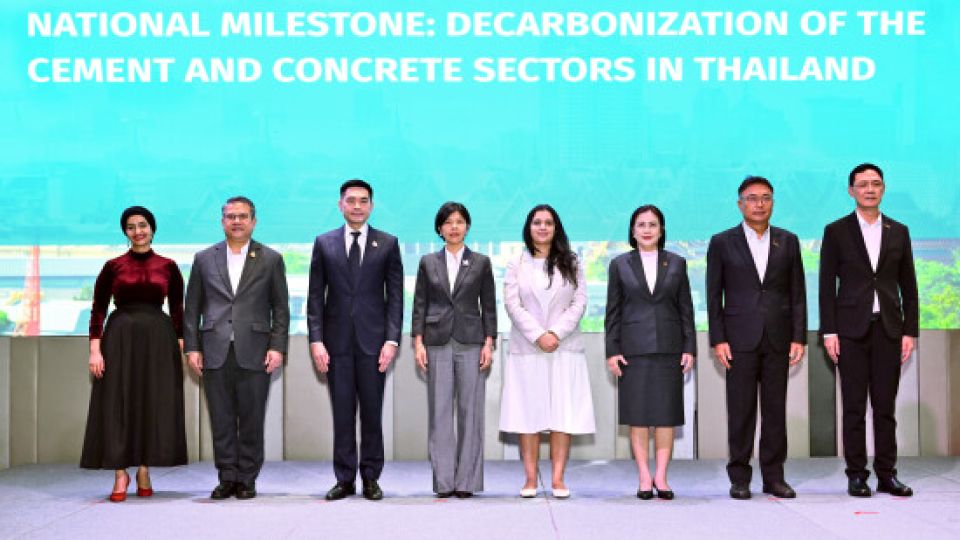
Thailand has taken a decisive step toward transforming its cement and concrete industry, unveiling a national decarbonisation initiative that positions the country as a regional leader in industrial climate action. The programme—developed in partnership with the United Nations Industrial Development Organization (UNIDO) and supported by the Government of Canada—aims to accelerate the sector’s transition toward Net Zero by 2050 through technology deployment, policy innovation, and green investment.
A National Milestone for Industrial Transformation
The initiative was formally marked as a “National Milestone” by the Thai Cement Manufacturers Association (TCMA), which serves as the central coordinating body for the project. Working alongside the Department of Climate Change and Environment and the Department of Industrial Works, TCMA is driving the implementation of the Thailand 2050 Net Zero Cement and Concrete Roadmap, aligned with the country’s NDC 3.0 commitments.
Canada has committed CAD 8 million (US$5.8 million) through Environment and Climate Change Canada (ECCC) to support the programme—one of the largest international climate‑industry collaborations in Thailand’s cement sector to date.
Dr. Chana Poomee, Honourary Chairman of TCMA and President of the ASEAN Federation of Cement Manufacturers (AFCM), emphasized that the milestone reflects the strength of national and international collaboration. He noted that decarbonisation is not only a climate imperative but also a strategic opportunity to enhance Thailand’s industrial competitiveness, attract green investment, and support long‑term economic growth.
Mobile Carbon Capture Unit to Begin Pilots in June 2026
A key technological highlight of the initiative is the deployment of a Mobile Carbon Capture Unit (MCCU) developed by Canadian company CETRI. Beginning in June 2026, the MCCU will rotate across cement plants participating in the Saraburi Sandbox, Thailand’s flagship industrial decarbonisation cluster.
The pilot aims to:
- test carbon capture performance under real operating conditions
- strengthen local technical capabilities
- reduce investment risks
- build a foundation for future large‑scale CCUS deployment
Dr. Chana highlighted that the MCCU represents a powerful example of international technology transfer, enabling “learning by doing” and accelerating Thailand’s readiness for industrial-scale carbon capture solutions.
Advancing Low‑Carbon Cement and Sustainable Finance
Beyond carbon capture, the programme also supports the development and adoption of low‑carbon cement technologies, including Limestone Calcined Clay Cement (LC3), which offers significant emissions reductions compared to traditional clinker‑based cement.
The initiative further includes workstreams focused on:
- policy development
- technical standards
- capacity building
- sustainable finance mechanisms
These elements are designed to increase investor confidence, improve access to green financing, and create a robust ecosystem for long‑term decarbonisation.
Strengthening Regional Leadership Through AFCM
TCMA is also extending its leadership beyond Thailand through its role in the ASEAN Federation of Cement Manufacturers (AFCM). The association is advancing the AFCM Decarbonization Roadmap, a shared regional framework aimed at reducing emissions across Southeast Asia’s cement industry.
“As President of AFCM, TCMA is committed to driving ASEAN toward becoming a low‑carbon region by accelerating technology transfer, strengthening industry capabilities, and unlocking new regional economic opportunities,” Dr. Chana said.
A Collaborative Path Toward Net Zero
With strong government backing, international support, and active industry participation, Thailand’s cement sector is positioning itself as a model for industrial decarbonisation in emerging markets. TCMA reaffirmed its commitment to expanding collaboration and welcoming global partners in technology and finance to accelerate the transition toward a competitive, low‑carbon future.
News and Photo sourced from, here
—
Want to know more about decarbonization, sustainable industry trends, and the breakthroughs driving real change? Explore the complete lineup of Industry Link’s 2026 events below. Registration details and agendas at contact@industrylink.eu.
Cementitious Materials International Technical & Trade Congress – Europe
28–29 October, Brussels, Belgium
A leading EMEA gathering on cementitious materials, market trends, regulatory updates, and regional opportunities.
CarbonZero Alternative Fuels & Raw Materials Global Conference & Exhibition 2026
Including Cementitious Europe – Congress
28–29 October, Brussels, Belgium
Global platform for Net Zero strategies, alternative fuels, raw materials, carbon capture, and emerging technologies.
Women in Cement and Construction International Congress 2026 – EMEA
30 October, Brussels, Belgium
A dedicated forum advancing diversity, equity, and inclusion across the cement and construction sectors.
Sustainability & ESG International Summit 2026
24 – 25 November, São Paulo, Brazil
Premier regional platform for Net Zero construction, circular economy, climate resilience, and ESG leadership.
Industry 5.0 Global Conference & Exhibition 2026
24 – 25 November, São Paulo, Brazil
Hosted at the same venue and dates as the Sustainability Summit — two events for one price, one ticket, full access.
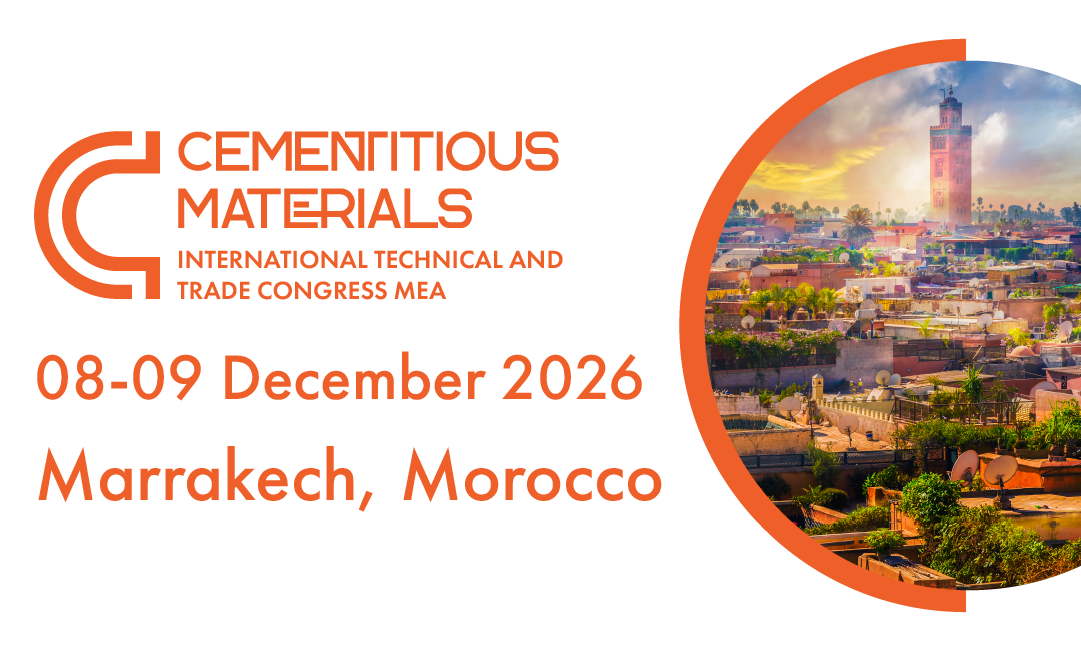
Cementitious Materials International Technical & Trade Congress – MEA
8–9 December, Morocco
The premier MEA event for cementitious materials, innovation, and regional trade opportunities.
Sign up to our newsletter on industrylink.eu to receive the latest news and future events info as well as exclusive pricing. Follow our LinkedIn page for news and insights for the next events.